All services
Our Services
For job seekers
- Further training for welders with an education voucher
- Free advice & funding check
- Support with the job center application
- Preparation for exams & certificates
- Practical welding training without prior knowledge
- Support until successful completion
Training & qualifications
- Welding courses according to DVS & ISO 9606
- Practical training (MIG, MAG, WIG, E-hand)
- Qualification as a certified welder
- Exam preparation & acceptance on site
- Refresher and advanced courses
- Individual training plans for everyone
For companies & businesses
- Employee training & post-qualification
- In-house training or at our premises
- Certifications for operational requirements
- Flexible dates for companies
- Documentation & evidence for audits
- Long-term training concepts
Welders are trained in 4 steps
Step 1
Registration & first contact
Fill out the contact form and we will get back to you as soon as possible. In a brief conversation, we will clarify whether the Welder training suits you and answer all open questions.
Step 2
Personal advice
We will discuss your goals, your current status and which welding processes make sense. We will explain the training process to you in an understandable way and without technical terms or pressure.
Step 3
Organization & Preparation
We will support you with all the necessary steps, for example with documents or funding opportunities. You will receive all the information you need about the start, the process and the next dates.
Step 4
Start of further training
You will start your practical welding training in our workshop. Step by step, you will learn the procedures, receive support and be specifically prepared for examinations and the job.
Contact us today
- We help you free of charge
- Jobcenter funded
- Certified training provider
Job prospects after the course (Mediation & Support)
After graduation, we will help you get into the job.
Our goal is not just a course - but that you can actually work afterwards. If you pass, you will receive Company suggestions and help with applications.
Support with Application & introduction
You get several companies to choose from
Many find a job in a short time (depending on the region/profile)
How quickly can I find a job?
This depends a little on your region, your course objective (e.g. TIG or MAG) and how flexible you are. Many find within a few weeks to 2-3 months something especially if you a valid test (e.g. ISO 9606) and we will help you with your application. If you are very picky (only one company, only one shift), it may take longer.
What are the salaries in this area?
Average salary as a welder by federal state
(Gross, full-time, approx. 40 hours/week - Source: gehalt.de)
| Federal state | Ø month (gross) | Ø year (gross) |
|---|---|---|
| Baden-Württemberg | 3.935 € | 48.799 € |
| Bavaria | 3.840 € | 47.621 € |
| Berlin | 3.624 € | 44.937 € |
| Brandenburg | 3.304 € | 40.975 € |
| Bremen | 3.677 € | 45.591 € |
| Hamburg | 3.873 € | 48.022 € |
| Hesse | 3.909 € | 48.467 € |
| Mecklenburg-Western Pomerania | 3.231 € | 40.069 € |
| Lower Saxony | 3.589 € | 44.509 € |
| North Rhine-Westphalia | 3.772 € | 46.772 € |
| Rhineland-Palatinate | 3.721 € | 46.143 € |
| Saarland | 3.649 € | 45.253 € |
| Saxony | 3.316 € | 41.113 € |
| Saxony-Anhalt | 3.278 € | 40.648 € |
| Schleswig-Holstein | 3.551 € | 44.027 € |
| Thuringia | 3.312 € | 41.069 € |
Germany-wide, other sources are approx. 3,100-3,300 € gross per month than average.
What qualifications will I have after the training?
After the training, you will not only have „done the course“, but will really have something in your hand that companies can work with:
Practice in welding processes (e.g. TIG/MAG/E-hand - depending on the course)
Safe working (occupational safety, basics, understanding of materials)
Examinations/certificates possible, e.g. ISO 9606 (this is the most important point for many employers)
and you can say clearly at the end: „I can do it practically, not just theoretically.“
Our applicants say:
„I did the welding training here and I'm really satisfied. Lots of practice, good explanations and you're not just left standing there. In the end, I knew exactly what I was doing.“
„For me, it was important to get a job quickly. The course was well structured, I did a lot of practical work and immediately had more self-confidence when applying for jobs and at interviews. I was even helped to get directly into a company.“
„I had been unemployed for a while and wanted to do something new.
I was very well received here. No complicated words, no stress.
Just explain, do, practise and now I even have a job lined up. The welding training cost me exactly nothing for 8 months.“
More Courses

Forklift truck / forklift license
The forklift training course teaches safe and practical working with industrial trucks. Participants learn how to use the forklift correctly, important safety rules and how to load and unload goods. Upon successful completion, they receive a recognized operator certificate for use in the company.
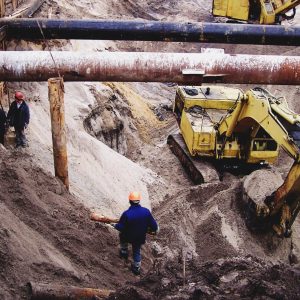
Pre-straightener according to isometry
The isometric pipe fitter qualification teaches how to read technical drawings and prepare pipelines for welding work. Participants learn how to correctly implement dimensions, prepare components and professionally align pipe systems. This qualification is particularly in demand in plant and pipeline construction.
Mostly provided Questions
How does further training as a welder work via the employment agency?
If you are registered with the job center or the employment agency, you can apply for a education voucher get. This means that the course costs, exams and often also learning materials are covered in full. We will explain which documents you need and prepare you for the interview at the job center. With the education voucher, your Welder training Employment Agency-supported and usually free of charge for you.
Is the welder training really free for me?
Yes, if the job center or employment agency approves your retraining, the Welder training free of charge for you. The office will then cover 100 % of the costs via the Qualification Opportunities Act or the education voucher. You pay neither course fees nor examination fees. The only important thing is that you meet the requirements - we will help you with this and discuss everything step by step.
Can I become a welder, even without experience or a degree?
In any case. Many participants start the Welder training without prior knowledge. You do not need to have any welding experience or a specific school-leaving qualification.
The training starts very simply: Protective clothing, getting to know the equipment, practicing your first seams. Step by step, you will learn how to weld safely and cleanly. If you are motivated and practise regularly, you too can Become a welder.
How long does it take to retrain to become a welder?
The duration of the professional Further training as a welder can vary depending on the program, but usually lasts several months. During this time, you will mainly learn practical skills: TIG, MAG and manual metal arc welding, materials science, occupational safety and preparation for the exam.
A large part takes place in the workshop so that you can work safely in the company later on. At the end, you will take a recognized welding exam (e.g. in accordance with ISO 9606).
What job opportunities do I have after retraining as a welder?
The job opportunities after a Further training as a welder are very good. Welders are sought after in many areas: Metal construction, plant engineering, industry, construction, repair companies and more. Once you have passed the exam and have official welding certificates, you will have a sought-after profession in your hands. We also support you with tips for job applications and can often put you in touch with employers in the region.